
Modernizing Healthcare Connectivity with Aruba Wi-Fi 6
Overview
Healthcare organizations today depend heavily on reliable and secure wireless connectivity to support daily operations, communication, and digital services. As technology evolves, many healthcare facilities face challenges associated with aging wireless infrastructure, increasing device demands, and heightened cybersecurity requirements.
To address these evolving needs, a healthcare organization engaged Binary Nexus to assist in modernizing its wireless network environment through the deployment of Aruba Wi-Fi 6 technology. The objective was to improve network performance, strengthen security capabilities, and establish a scalable foundation for future growth.
The Challenge
Many healthcare facilities operate in highly connected environments where staff, patients, visitors, and connected devices rely on uninterrupted wireless access.
Common challenges encountered in legacy wireless environments include:
Aging Infrastructure
Older wireless technologies may struggle to support the performance expectations of modern applications and an increasing number of connected devices.
Evolving Security Requirements
As cybersecurity threats continue to evolve, organizations must regularly evaluate and modernize their network infrastructure to align with current security best practices and industry standards.
Growing Device Demand
Healthcare environments increasingly rely on a wide range of connected technologies, including mobile devices, clinical workstations, IoT equipment, and visitor networks. This growth places additional demands on wireless infrastructure.
Coverage and Reliability
Consistent wireless coverage is essential for ensuring a seamless user experience across clinical, administrative, and public areas.
The Solution
Following an assessment of the existing environment and operational requirements, a wireless modernization strategy based on Aruba Wi-Fi 6 technology was recommended.
Why Aruba Wi-Fi 6?
Aruba Wi-Fi 6 solutions are designed to deliver:
Improved wireless performance
Enhanced device capacity
Modern security capabilities
Better user experiences in high-density environments
Simplified network management
Scalability for future requirements
Planning and Design
A structured planning approach was undertaken to ensure the upgraded environment aligned with operational objectives.
Activities typically included:
Wireless coverage assessment
Capacity and performance planning
Access point placement optimization
Identification of potential interference sources
Future growth considerations
This approach helps ensure the wireless environment is designed to support both current and future operational needs.
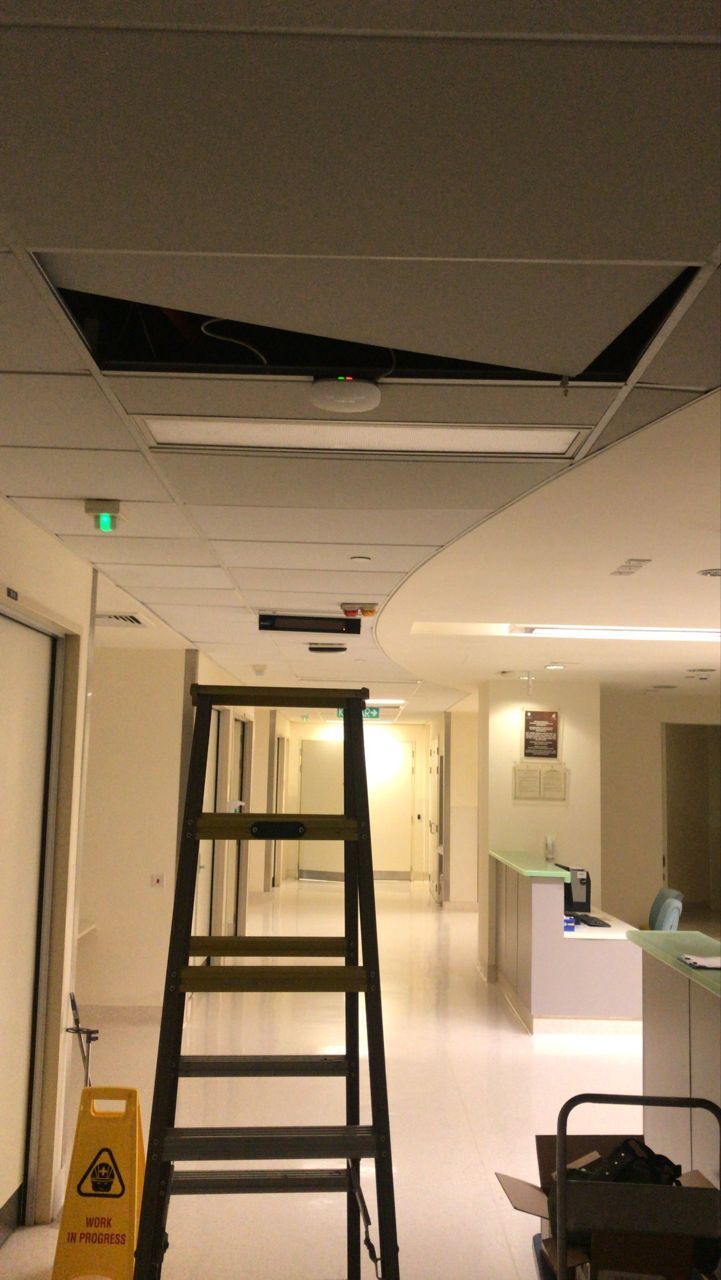
Implementation Approach
The modernization project focused on deploying a next-generation wireless infrastructure while minimizing operational disruption.
Key considerations included:
Modern Wireless Access
Deployment of Aruba Wi-Fi 6 access points to improve connectivity, performance, and user experience throughout the facility.
Security-Oriented Network Design
Implementation of network segmentation and access control strategies to support security best practices and operational requirements.
Centralized Management
Utilization of Aruba's centralized management capabilities to provide greater visibility into network performance, connected devices, and operational health.
Scalability and Future Readiness
The upgraded architecture was designed to accommodate future technology adoption and increasing wireless demands.
Benefits Achieved
Modern wireless infrastructure can provide healthcare organizations with several advantages, including:
Improved Connectivity
More consistent wireless performance and enhanced user experiences for staff, patients, and visitors.
Enhanced Security Posture
Support for modern security frameworks, stronger encryption standards, and improved visibility into network activity.
Operational Efficiency
Simplified network management and monitoring can help reduce administrative overhead and improve responsiveness.
Future Scalability
A Wi-Fi 6 foundation enables organizations to better support future digital initiatives, connected devices, and evolving business requirements.
Conclusion
As healthcare organizations continue their digital transformation journeys, modern wireless infrastructure plays an increasingly important role in supporting operational efficiency, security, and user experience.
Through the adoption of next-generation wireless technologies such as Aruba Wi-Fi 6, organizations can build a more resilient, scalable, and future-ready network environment capable of supporting evolving healthcare demands.
This case study presents a generalized example of a healthcare wireless modernization project. Specific implementation details have been omitted to protect operational and security considerations.